Technical committee member of the year
Award Criteria
The person chosen for NADCA’s Technical Committee Member of the Year award is subject to several sets of criteria. The award, chosen by NADCA’s technical staff and Technical Committee Chairmen, is given based on participation in committees, contribution to committees/task forces, and applicability of efforts to industry.
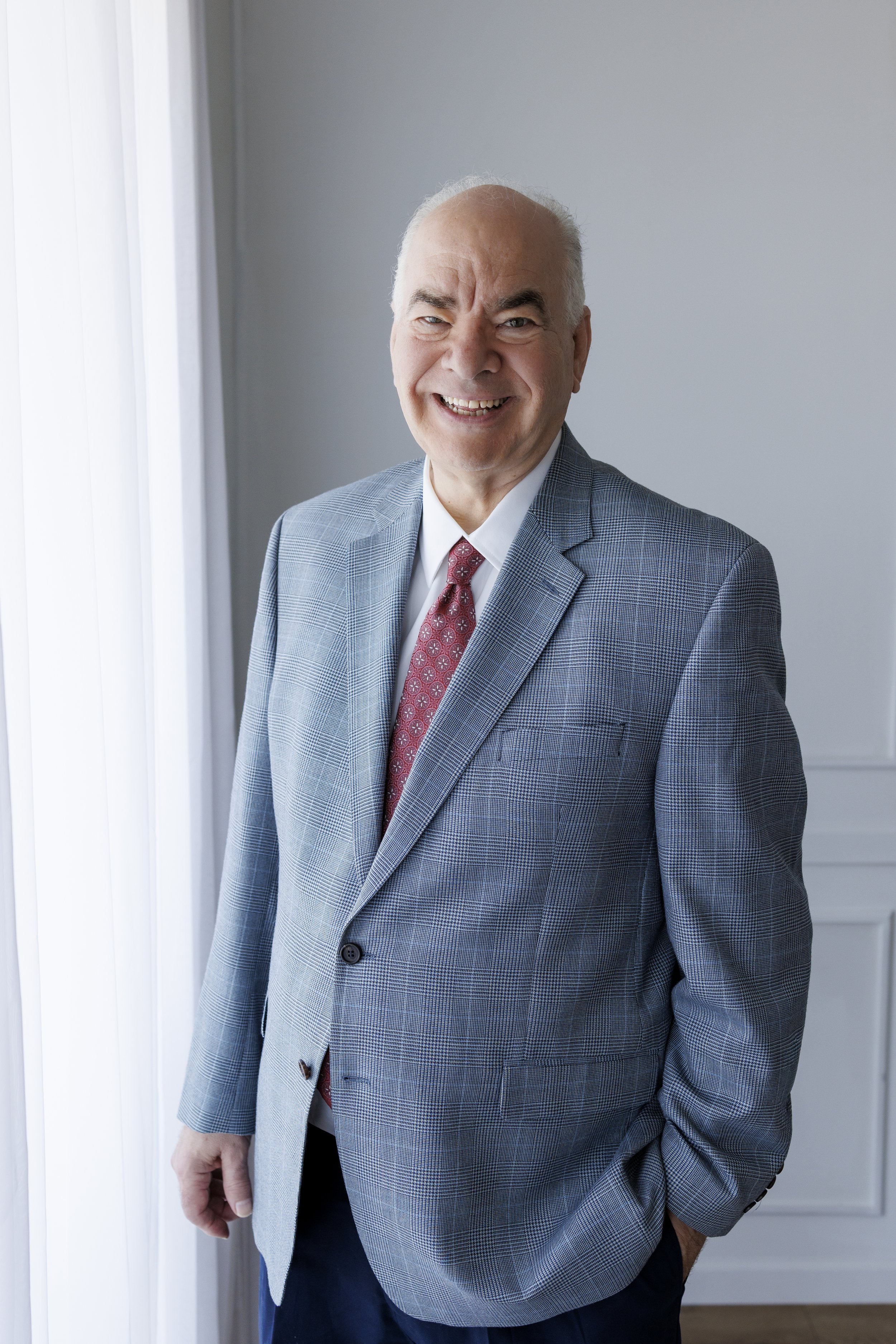
David Bell
David C. Bell is the Founder, Chairman, and CEO of Phygen, Inc. He has spent more than three decades advancing surface engineering technologies for the die casting industry through technical innovation, applied research, and industry collaboration.
Throughout his career, Dave has worked with die casters, suppliers, engineers, and researchers to address persistent manufacturing challenges involving die wear, soldering, thermal management, lubricant use, casting quality, and productivity. His work has contributed to the development and industrial application of advanced surface treatments that improve die performance and manufacturing efficiency.
Dave has been an active contributor to the North American Die Casting Association, serving on NADCA’s Die Materials Committee for more than 25 years and authoring or co-authoring numerous technical papers and conference presentations. He has collaborated with die casting companies throughout North America, including Mercury Marine, as well as researchers at the Colorado School of Mines, to develop and evaluate practical solutions for extending die life, reducing lubricant use, and improving casting quality.
The results of this work have been shared through technical publications, industry conferences, and educational presentations for the benefit of the broader die casting community. A strong advocate for collaboration among manufacturers, suppliers, universities, and professional societies, Dave has devoted much of his career to bridging scientific research and industrial practice through technical leadership, applied innovation, and knowledge sharing.
Dave is honored to be recognized as NADCA’s Committee Person of the Year and remains committed to helping advance the science, technology, and future competitiveness of the die casting industry.
Why the Passion for Die Casting, Dave?
Three People—and an Industry—That Shaped My Journey
Dedicated to the mentors, customers, colleagues, and friends whose confidence, encouragement, and willingness to tackle difficult problems together made this journey possible.
People often ask why I have devoted so much of my career to the die casting industry. The answer is that my passion has been shaped by extraordinary people, difficult technical challenges, and an industry whose spirit of collaboration is unlike any other I have experienced.
When I look back over more than three decades, I realize that three people profoundly influenced that journey.
The first was Professor John Moore of the Colorado School of Mines, a researcher whose work I greatly admired. Dr. Moore was studying what he believed to be the ideal coating architecture for solving one of die casting's most persistent problems: die soldering. He concluded that the "perfect" coating would have a dense, equiaxed, noncolumnar microstructure. I remember reading his work and thinking, That's exactly what we are able to build!
Earlier in my career, I had the privilege of introducing modern physical vapor deposition (PVD) technology through Multi-Arc Vacuum Systems (later Multi-Arc Scientific Coatings) throughout North and South America and Southeast Asia. Although cathodic arc PVD represented a major advancement, the process also produced metallic droplets, or macroparticles, that limited coating quality.
Founding Phygen gave me the opportunity to solve that problem. Our mission was to develop a fundamentally different surface-enhancement technology capable of producing the dense, low-defect coating architecture Dr. Moore had envisioned. Looking back, that scientific challenge became the foundation of everything we have accomplished with Phygen’s XVD technology.
The second person was Dr. Ray Donahue, Vice President of Engineering at Mercury Marine. Ray contacted us after Mercury had invested heavily in new die casting equipment but was unable to produce a single acceptable casting because of severe soldering on a critical metal-saver insert.
What impressed me most was not only Ray's technical insight, but also his willingness to entrust a small technology company with one of Mercury's most difficult manufacturing challenges. He understood that meaningful innovation often begins with partnerships built on trust—and that small businesses can make important contributions to solving major industrial problems.
Working alongside Mercury's outstanding tooling engineers, including Steve Knickel, we solved the soldering problem and made 30,000 castings without any soldering and established a partnership that has endured since then and is strong today. Together, we demonstrated significant improvements in die life, casting quality, manufacturing productivity, and lubricant reduction. Those projects became some of the earliest demonstrations that advanced surface engineering could serve as a strategic manufacturing technology rather than simply another coating applied to a die. Mercury Marine has remained an exceptional collaborator and valued partner in advancing die casting technology.
The third person was Mike Meyer, then Plant Manager at Mercury Marine. After our work had become part of everyday production, Mike told me something I have never forgotten. He said he could walk through the plant and immediately identify which dies were using Phygen surface enhancement simply by looking at the quality of the castings they produced.
To me, there could be no greater compliment. It was proof that our work had moved beyond the laboratory and was making a visible difference on the factory floor.
Along the way, many people encouraged us to avoid die casting because its operating conditions were simply too demanding. I always believed the opposite. If we could solve some of the toughest problems in manufacturing, we would become better equipped to serve every other industry. That philosophy continues to guide Phygen today.
What has kept me engaged all these years is more than the technology—it is the people. Through our work in defense, automotive, food, and many other manufacturing industries, I have encountered no community quite like die casting.
The willingness of competitors, suppliers, researchers, and manufacturers to work together through NADCA to solve shared challenges is truly distinctive. I have never encountered another industry in which collaboration and the open exchange of technical knowledge are so deeply valued. Participating in that community has been one of the greatest privileges of my professional life.
Today, my passion for surface enhancement is stronger than ever because I believe we are still pursuing the objective that first inspired me decades ago: finding better solutions that extend die life, improve casting quality, increase productivity, reduce waste, and strengthen the competitiveness of the die casting industry.
For me, die casting has never been simply about coating dies. It has always been about helping manufacturers accomplish what they once believed was impossible.
Looking back, I realize that this journey was never mine alone. It was made possible by mentors who challenged my thinking, customers who trusted us with their most difficult problems, colleagues who shared the belief that the impossible is often just a problem waiting for the right solution, and an industry that welcomed innovation through collaboration.
I remain deeply grateful to the many engineers, researchers, customers, colleagues, and friends—especially those within NADCA—who have inspired and supported me throughout that journey.
Receiving NADCA's Committee Person of the Year Award is especially meaningful because it comes from a community that has been such an important part of my professional life. It is both a tremendous honor and an encouragement to continue the work.
I look forward to helping advance the science, technology, and future of die casting for many years to come.